Chapter 3January 14, 2026
Script and Filming
Location:Sao Miguel - Azores
We were looking to tell a smuggling story: two fishermen carrying something illegal from one side to the other. We knew that these types of stories existed on the island, and we had already decided that we wanted to work with actors and create a work of fiction. With that idea, I wrote a script based on what we had been discussing.
The big twist came when we had a talk with Marc and Mariana (production and casting from Extática Cine). When we told them our initial idea, Mariana—who is from the Azores—showed us a news story that had come out on December 11, 2025: it spoke of 182 children who, for decades, were handed over/adopted clandestinely to American couples linked to the Lajes Air Base. That's when we understood that what we were looking for—a "real," dark, and local smuggling—could be much more powerful if the contraband was, literally, a baby. And that this real fact could be transformed into an intimate, modern, and emotionally dangerous fiction.
From there, the protagonist's story was born: a 45-year-old man who lives a comfortable and pleasant life on the island. He has a good social and economic position, plays sports, enjoys himself, cooks, and is getting to know someone. But he carries an internal void that he cannot explain. One day, reading that news on his phone, he begins to tie up loose ends that were always there: there are no photos of him as a baby, there are strange silences, details that don't add up. He remembers a box kept in the garage with his birth certificate and documentation; he goes, looks for it, opens it... and understands that he is adopted and that his parents never told him. Later, as a way of processing and healing, he writes a poem based on that collapse.
With the script already defined, we moved on to casting and making practical decisions. Based on the available actors, we chose the protagonist, the American (adoptive father), and the fisherman. And a perfect coincidence occurred: the protagonist had a wife who could work as the girl he was dating in the story, and he also had a three-year-old boy who was exactly what we needed for the key scene. With that cast assembled, we began to build the shooting plan.
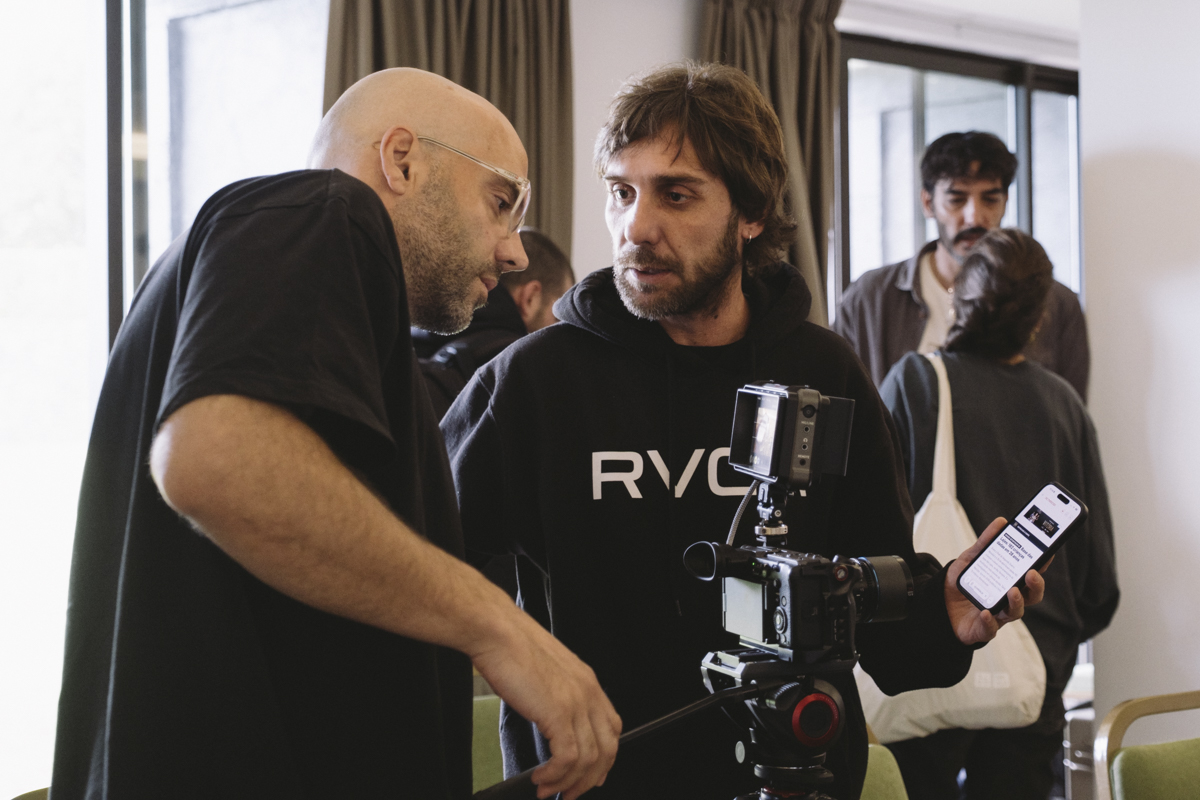
We decided to do three or four days of shooting, which for the workshop was a lot. They were intense days, with real set demands. Working with a three-year-old boy complicated things quite a bit: he would get in the way, make noise, and disrupt the atmosphere of the scenes with sound. And in the main scene—when he had to "act" for real—he simply refused: he got angry, cried, and it became a very difficult situation. We turned it around when I, Juan, started playing with him and the whole set relaxed; only then were we able to film the fisherman handing over the child to the American, which was one of the most important scenes in the film.
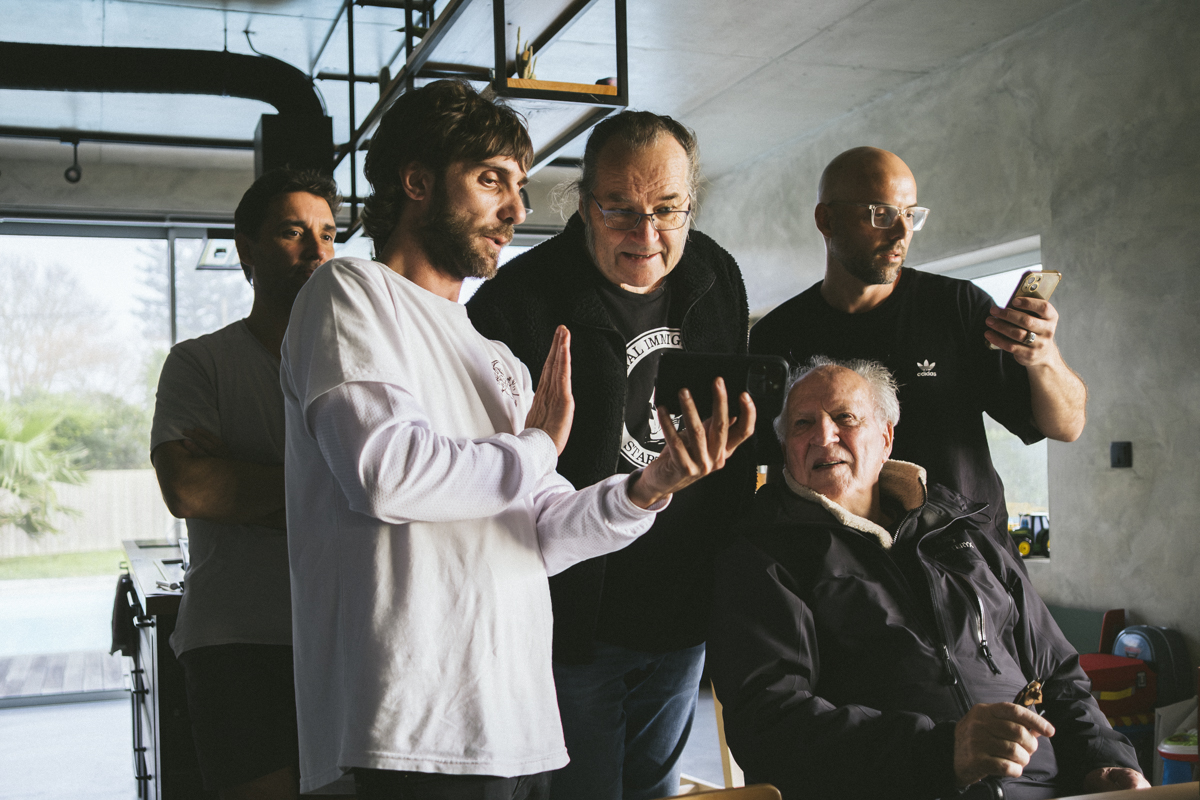
On the second day of shooting, we had the honor of receiving Werner Herzog and Peter Zeitlinger, the cinematographer and regular collaborator of Herzog. That moment raised the bar for us in real time: not through speech, but through the simple fact of being there filming, with the set ready, standing by decisions, solving problems, and knowing that every shot had to justify its existence.
There were also very good things that favored us: our actor had the perfect location for what we needed. And he also practiced spearfishing, which added a visual texture and a physical world that fit the aesthetic we wanted. We had brought anamorphic lenses and were looking for a modern and elegant image, with good cinematography, taking advantage of the opportunity to practice seriously and work with actors in a classic fiction, without excuses.
Fortunately, the shoot went quite well overall: with chaos, with exhaustion, with moments of real tension, but with strong material. And from there, the post-production process began.
Photo Gallery
1 / 9
Comments (0)
No comments yet. Be the first!